
Second-tier NBFC stocks are trading at 24.4x their trailing earnings, which is nearly twice their 15-year average of 13.9x

'The velocity of the market correction in September was so fierce that 9 stocks declined for every one that advanced,' reveals Samie Modak.

The Centre has set a steep divestment target of Rs 80,000 crore for 2018-19. In the first six months, it has managed to mop up less than Rs 10,000 crore.

Just before the 2008 financial crisis made headlines, Indian companies were on a global buying spree. In the fifth part of the series, Dev Chatterjee and Krishna Kant discuss how the crisis came as a black swan event for some, changing the mood from exuberance to despair.
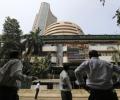
'It is easy to dramatise the events of today, but it is far more important to focus on the fact that we have a radically overvalued financial sector. It is a house of cards.'

In dollar terms, the Indian markets managed to climb back to 2008 levels only in January this year. The subsequent fall in the rupee because of emerging market woes has once again pushed the markets below their 2008 level in dollar terms.

A weaker rupee could aid corporate earnings through its positive impact on export intensive sectors such as information technology services, pharmaceuticals and commodity producers such as metal and mining, and oil and gas companies.
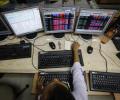
Cochin Shipyard, BASF India, Ingersoll Rand, Eicher Motors, Federal Bank, and Timken India are some of the firms where voting could have got affected, sources said.

Interception of electronic communication should also be covered in the powers being sought, the report said.

HUL, ITC, Nestle, Colgate, Dabur, Britannia, Asian Paints, P&G are trading at nearly 48 times. The previous record high was 53 times at the end of March 1994.

In recent months, three companies - PC Jeweller, Vakrangee and Kwality - decided to withdraw their share buyback proposals
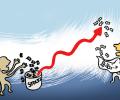
'After multiple days of losses, any relief rally is welcome. However, the trend hasn't changed.'

On the other hand, the group's two traditional cash cows, TCS and Tata Motors' subsidiary Jaguar Land Rover, are slowing as other businesses pick up pace

The combined assets of the top five - Tata Consultancy Services (TCS), Infosys Technologies, Wipro, HCL Technologies and Tech Mahindra were down one per cent to Rs 27,7400 crore at the end of 2017-18, from Rs 28,0100 crore a year before.

While selling started in April, it has intensified this month, with FPIs pulling out $1.1 billion and $2.5 billion from equities and debt market, respectively

With Karnataka election results out of the way and as several key states, including Madhya Pradesh and Rajasthan, prepare for assembly polls later this year ahead of the 2019 general election, Shankar Sharma, vice-chairman and joint managing director, First Global, advises investors to ignore all the noise around the elections.

Flipkart will need $2 bn annual profit to make Walmart investment viable, which will mean yearly revenue of $100 bn

Did top Indian business groups miss the e-commerce opportunity by focusing on replicating the Walmart model instead of following the Amazon model of online shopping?

'Macro headwinds are rising for Indian equities in the form of rising commodity prices, especially oil, depreciating rupee, fiscal challenges, election-related uncertainty and upside risks to inflation'

HDFC Bank, Reliance Industries and Housing Development Finance Corporation (HDFC) -- with free-float market cap of over Rs 3 trillion -- have the highest weight in the Sensex and the Nifty.
